
YouTube
Koolpte Vega Plus 80/600 Product Walkthrough

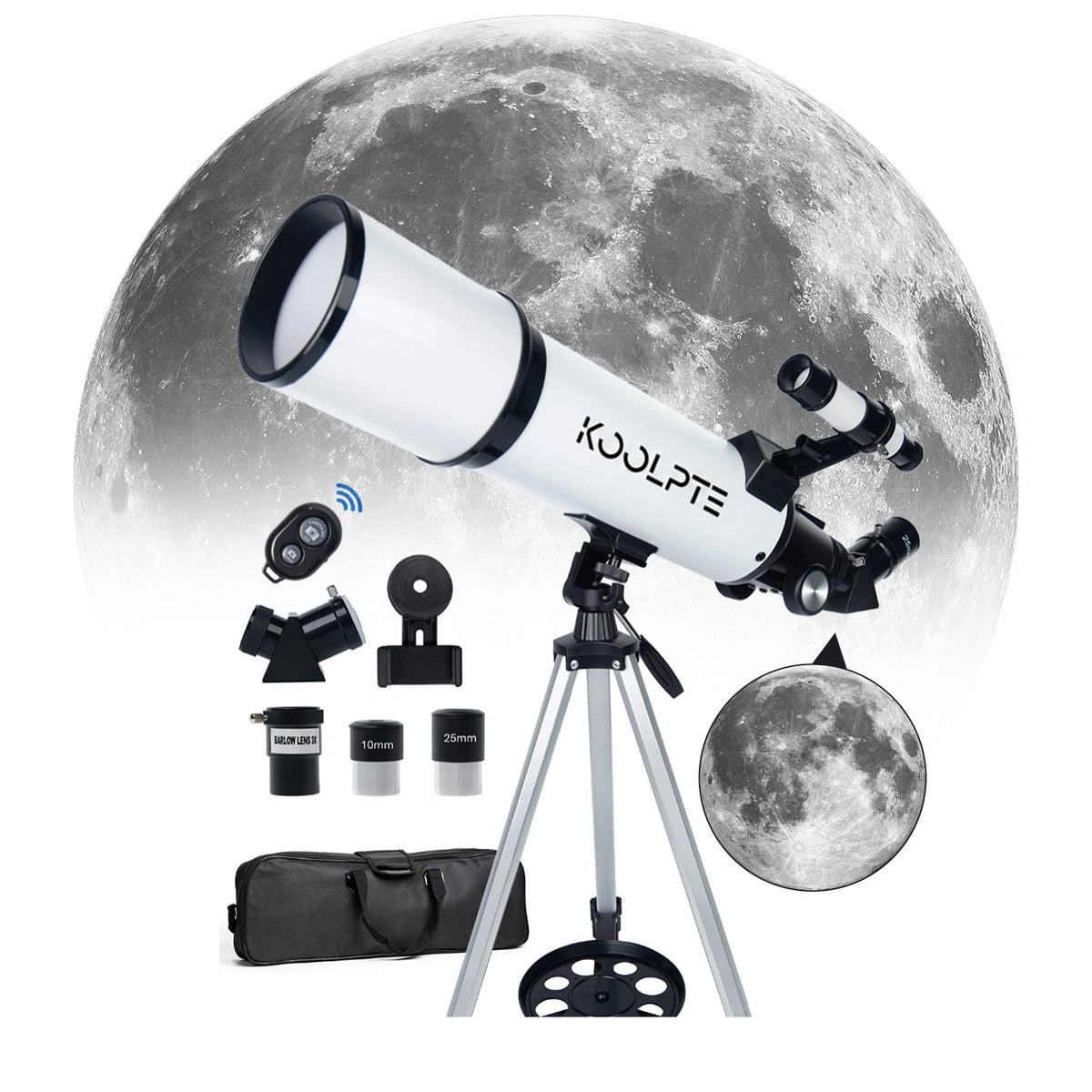




Brighter 80mm Views for Family Stargazing | Fine-Adjustment Controls
A little spooky, a lot of stargazing! Use code QUIZ10 for 10% off your first order.
Koolpte Vega Plus 80mm Aperture 600mm Refractor Telescope
If you have any questions, you are always welcome to contact us. We'll get back to you as soon as possible, within 24 hours on weekdays.
Shipping Information
For delivery questions or tracking help, contact our support team.
Customer Support
Contact our support team for help with ordering, setup, or product questions.
FAQ’s
See the questions below for guidance on viewing targets, eyepieces, phone photos, and warranty.
Contact Us
Use our Contact Us page for order or product support. Include your order number for order-related questions.
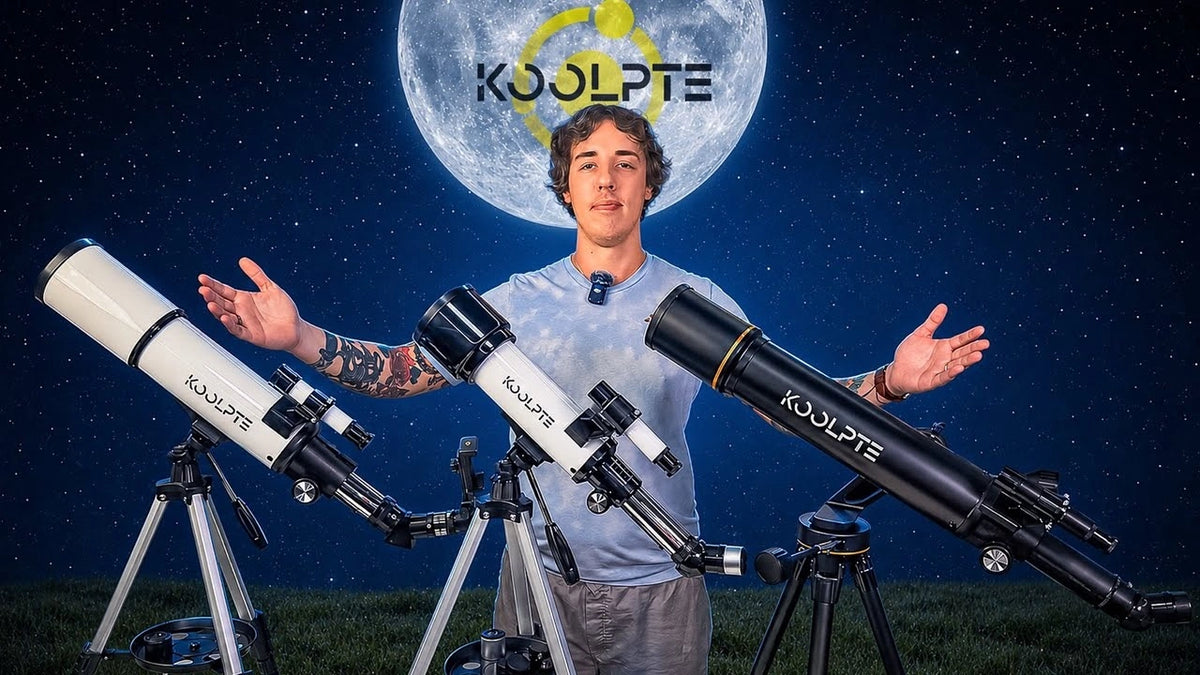
Watch setup videos, creator reviews, and customer experiences with the brighter 80mm Vega Plus refractor telescope.


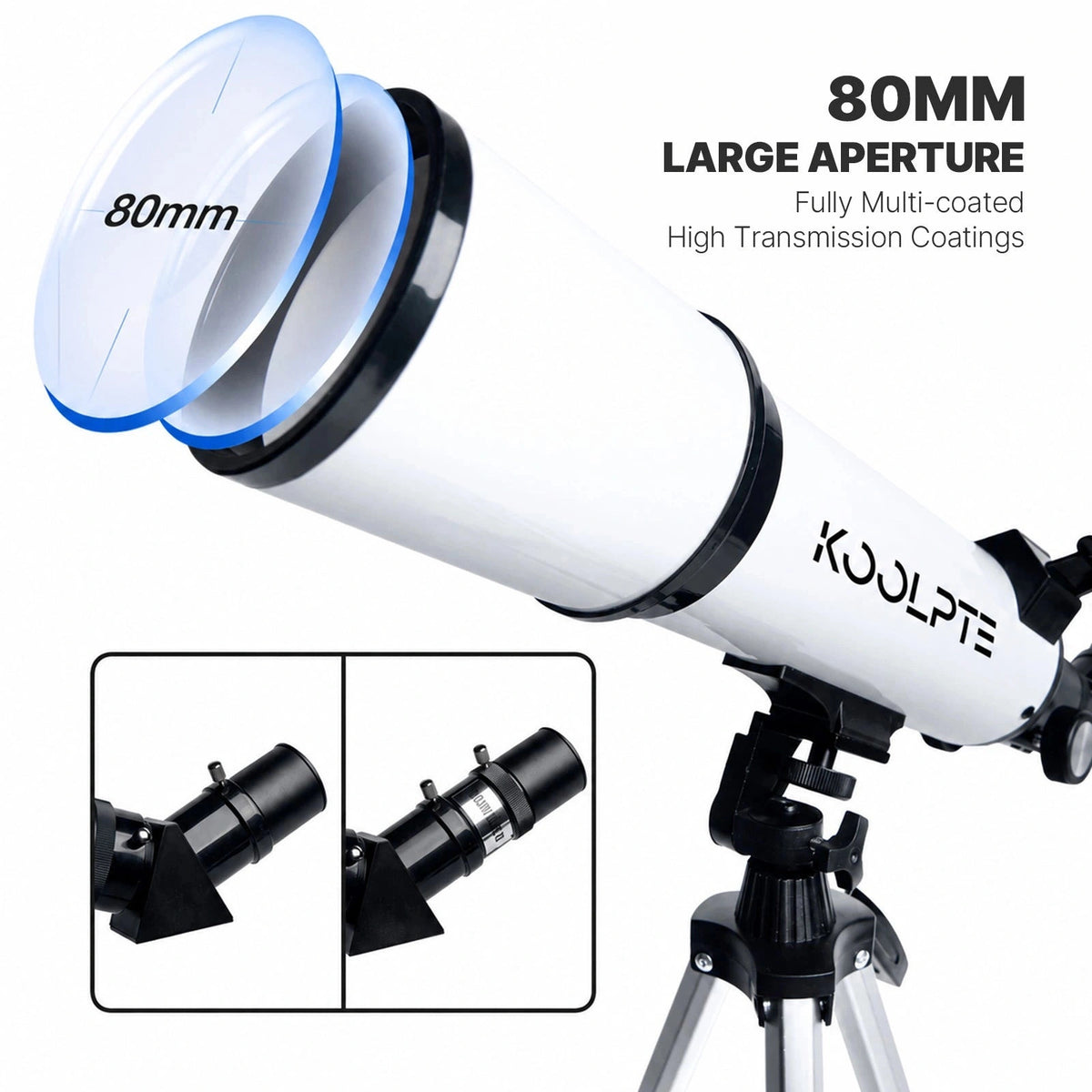
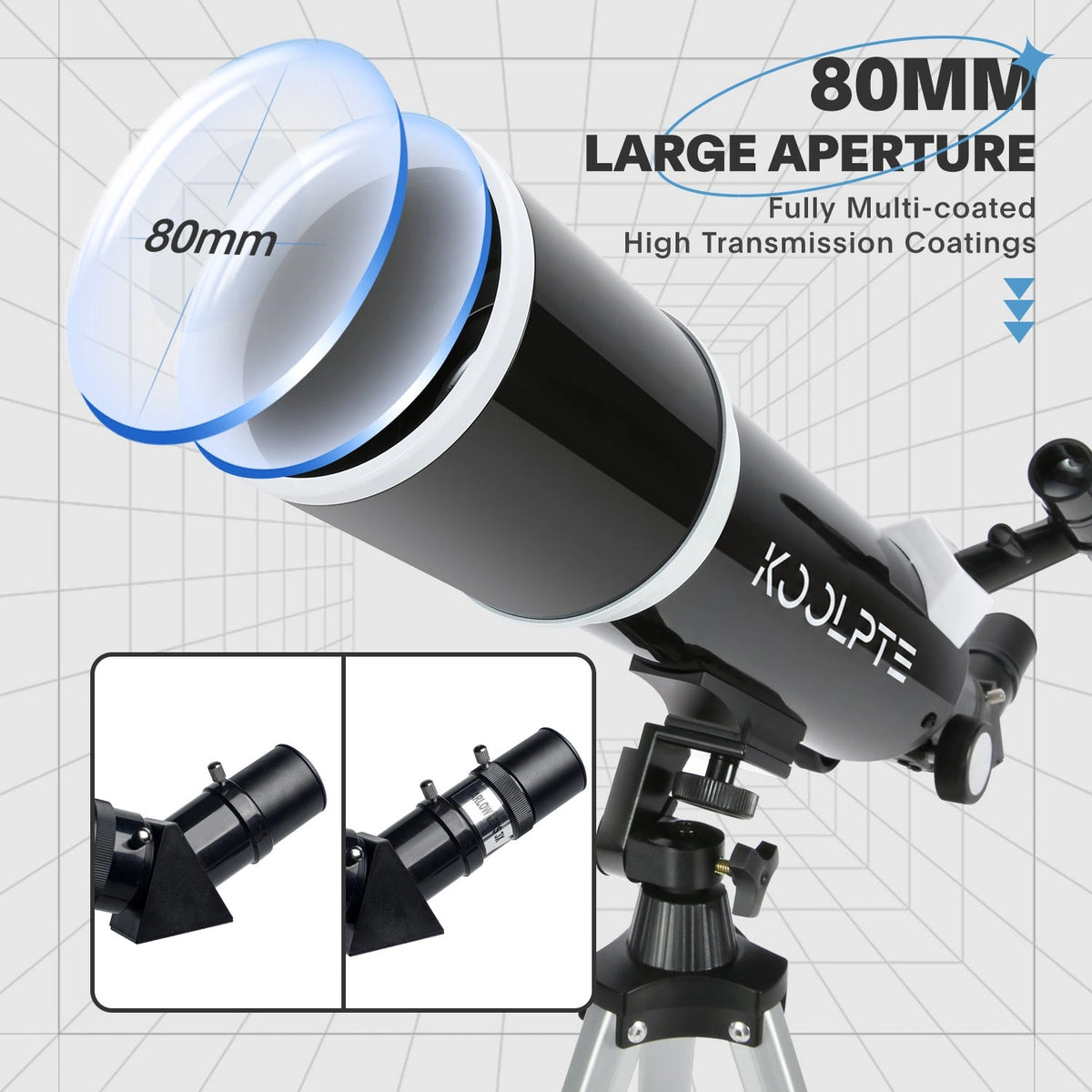
The 80mm aperture gathers more light than 70mm starter models, giving families and adult beginners brighter views of the Moon and bright planets.

The 600mm focal length gives Vega Plus a balanced view for lunar detail, bright planet watching, and distant daytime targets.

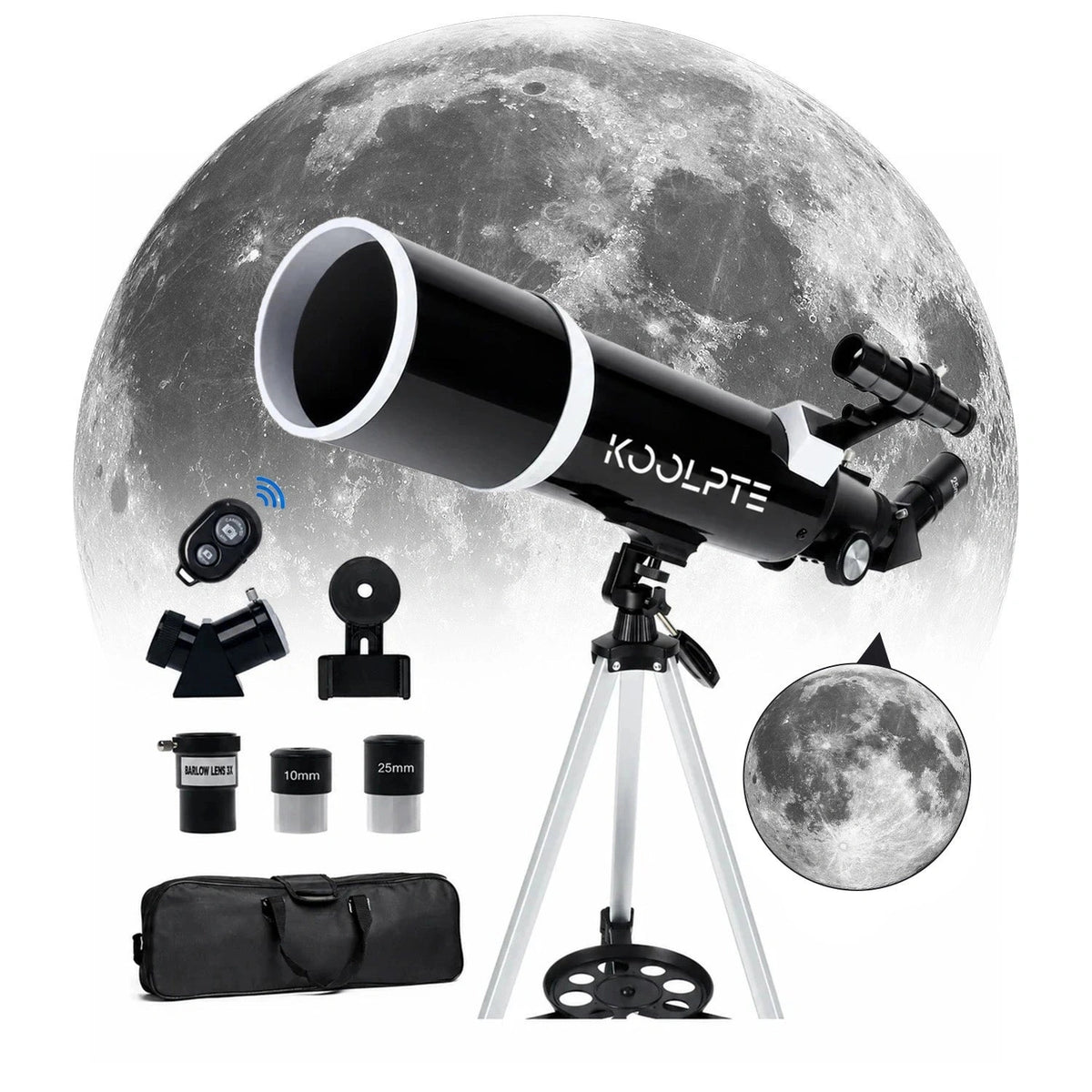
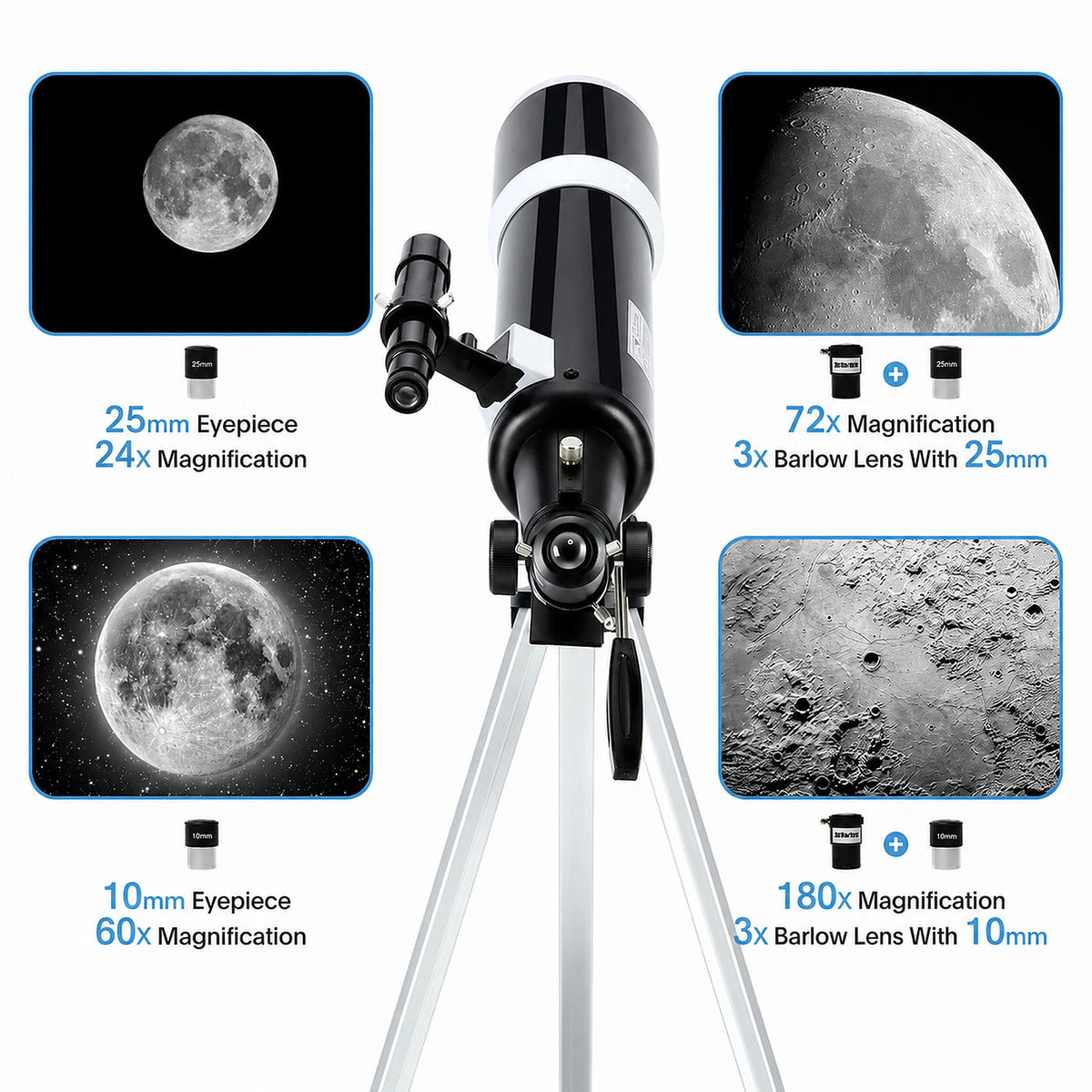
The 25mm and 10mm eyepieces provide 24× and 60×. With the 3× Barlow, calculated combinations reach 72× and 180×; practical clarity depends on sky and viewing conditions.

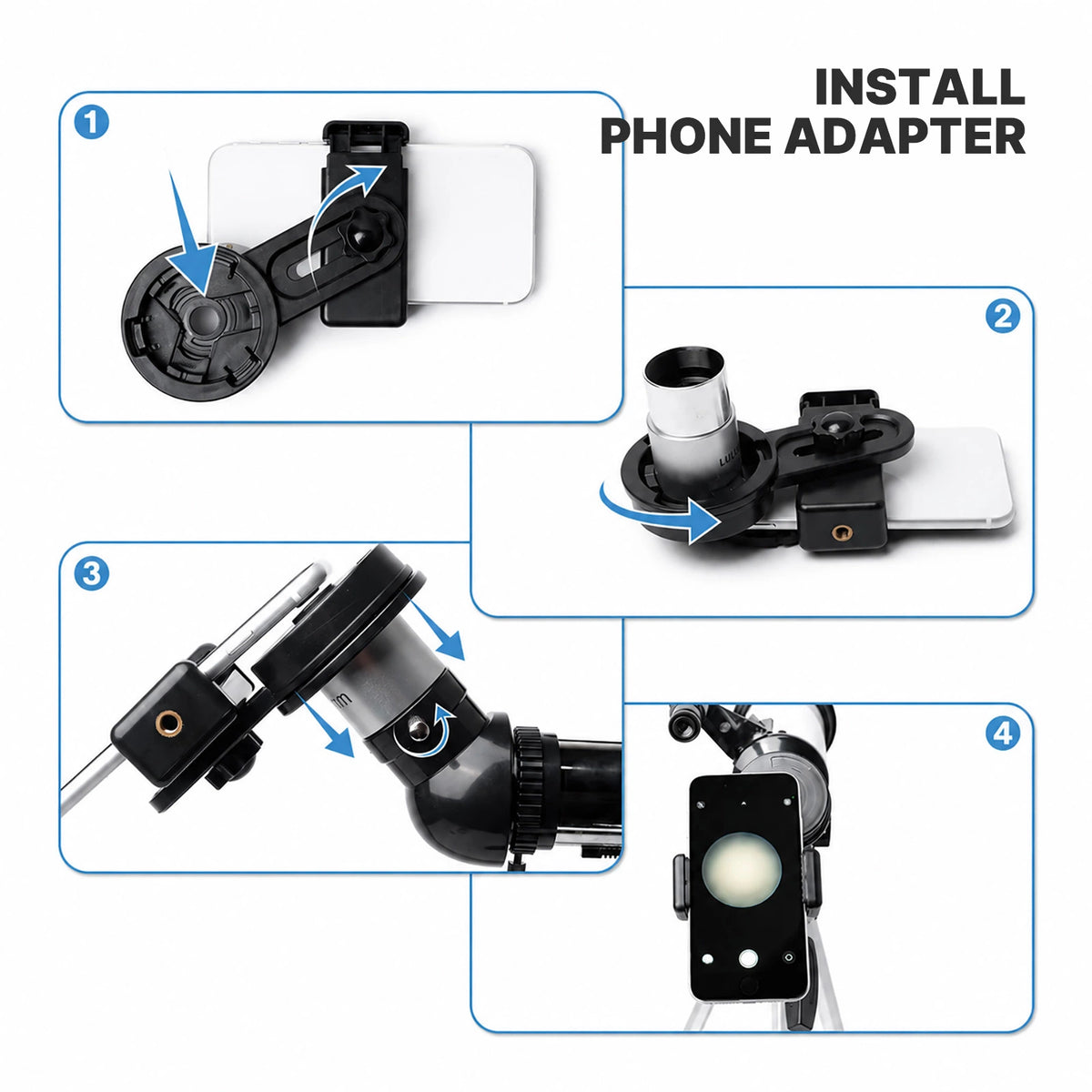
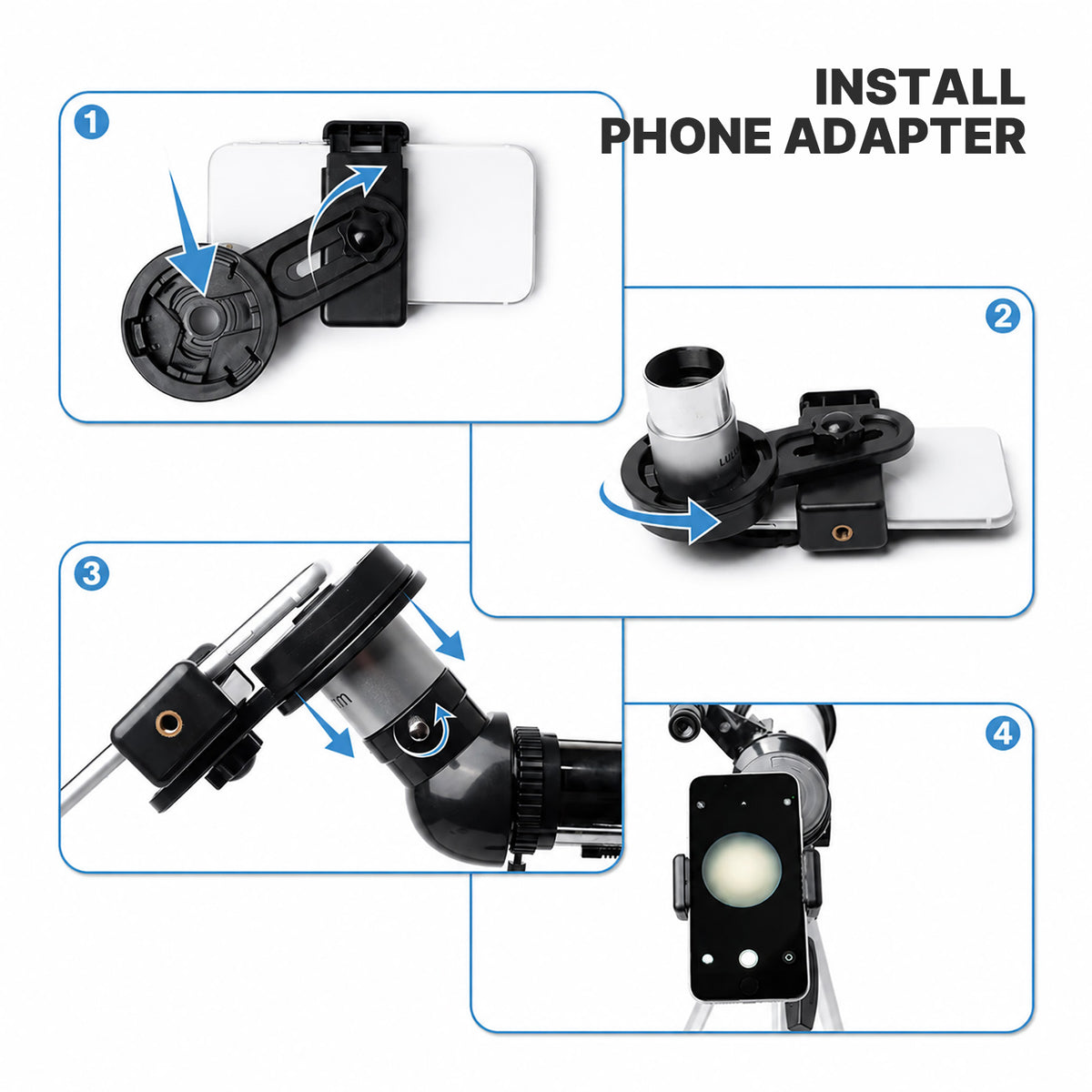
Use the smartphone adapter and remote to practice simple Moon photos after the telescope is focused and stable.

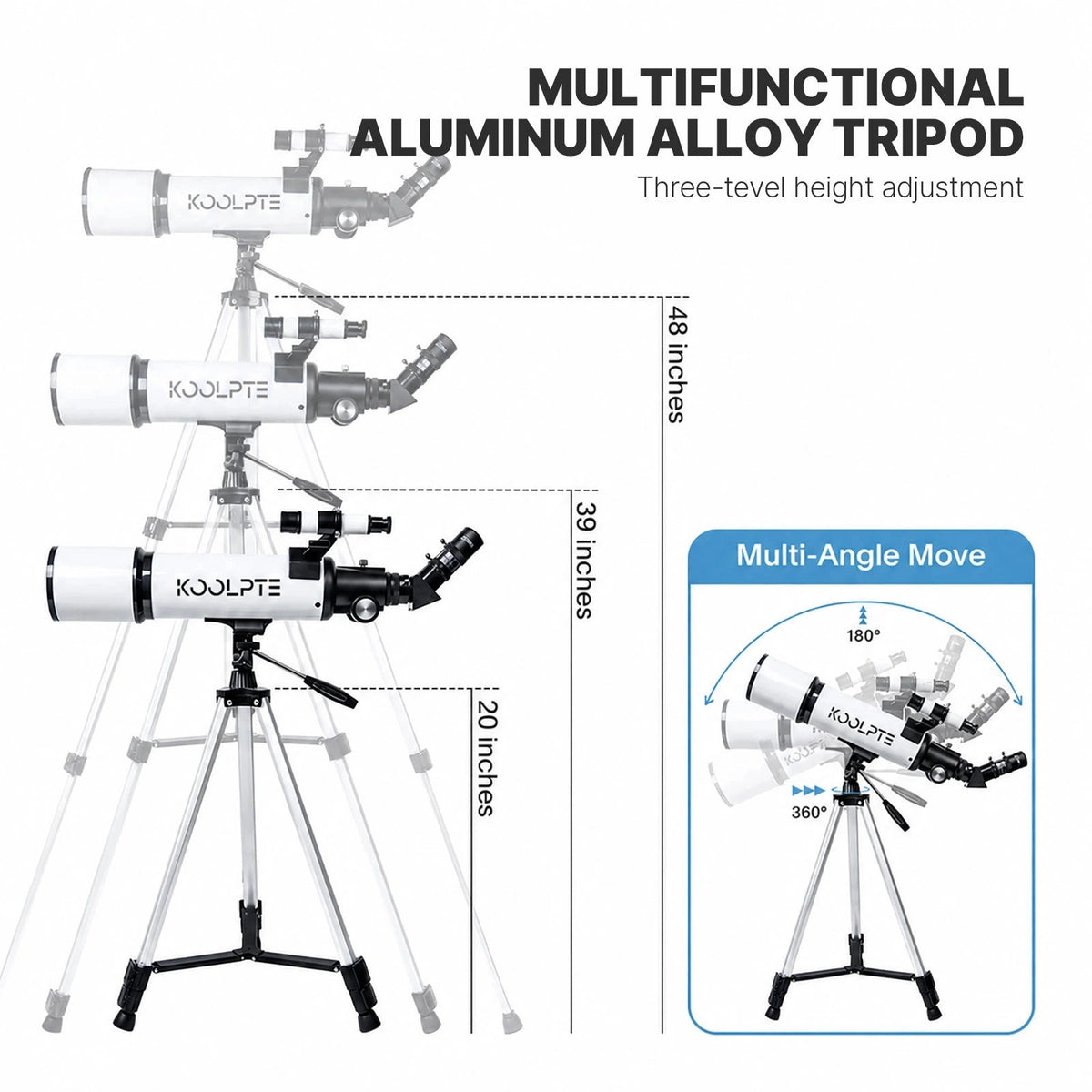
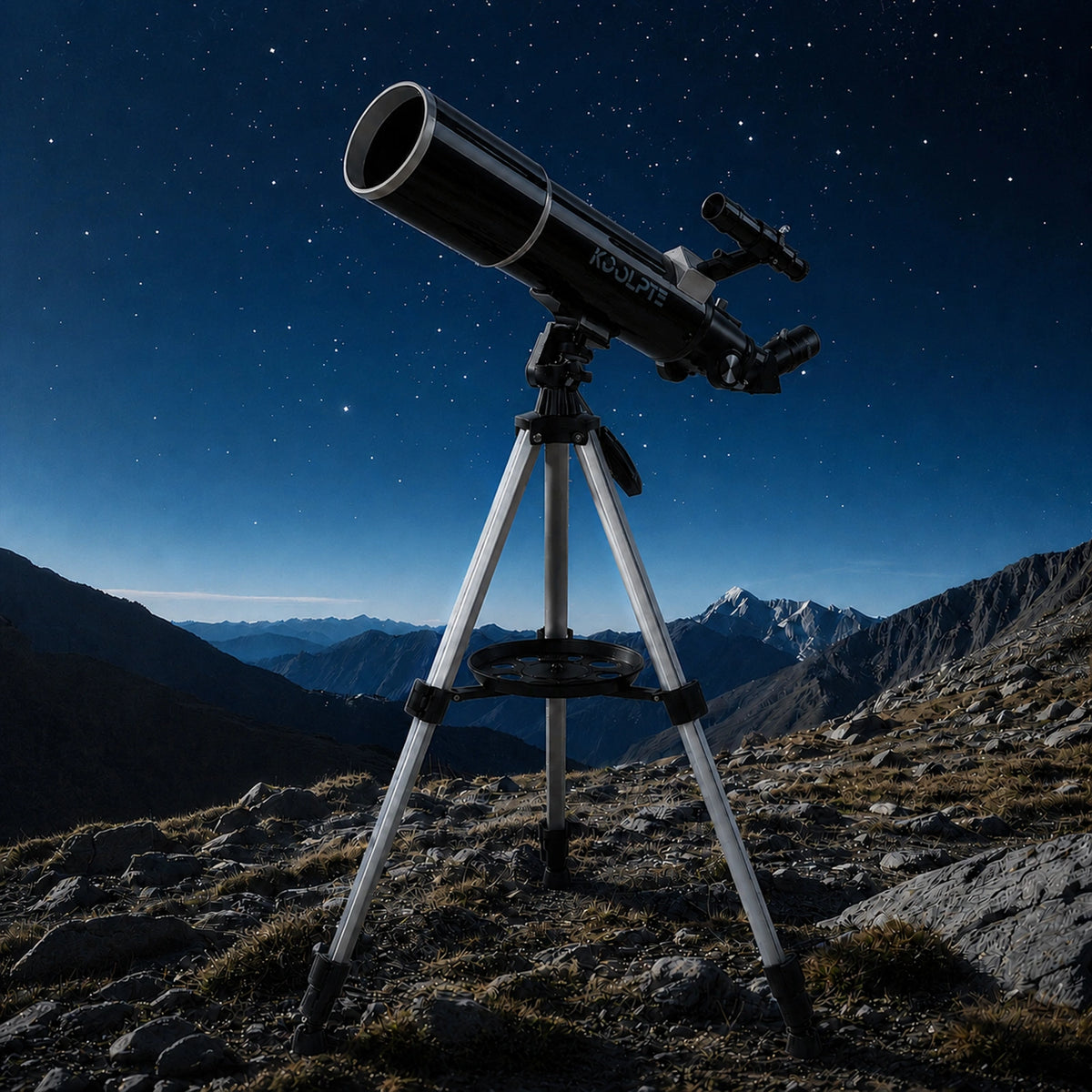
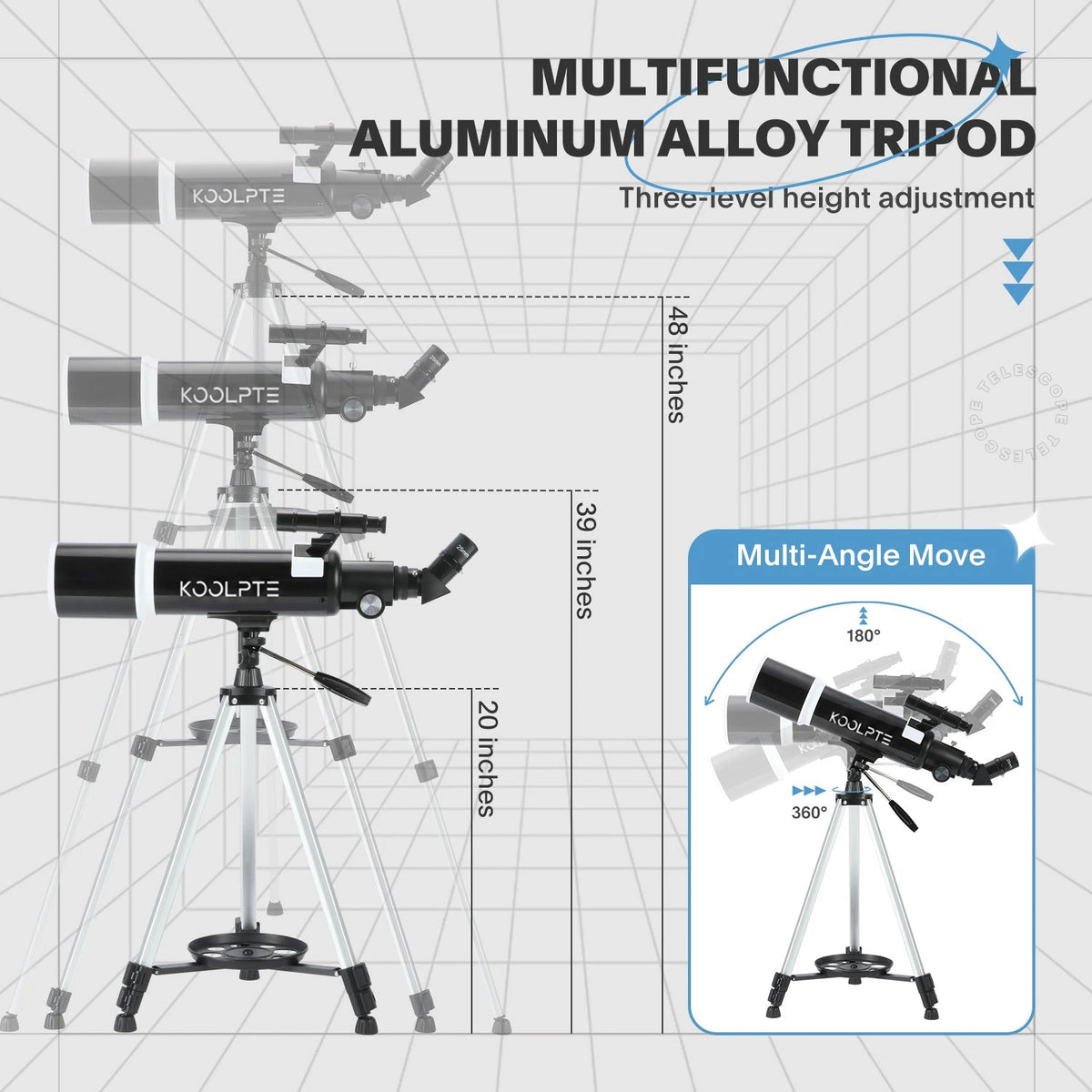
The adjustable tripod helps adults, teens, and families find a comfortable viewing height for backyard stargazing.

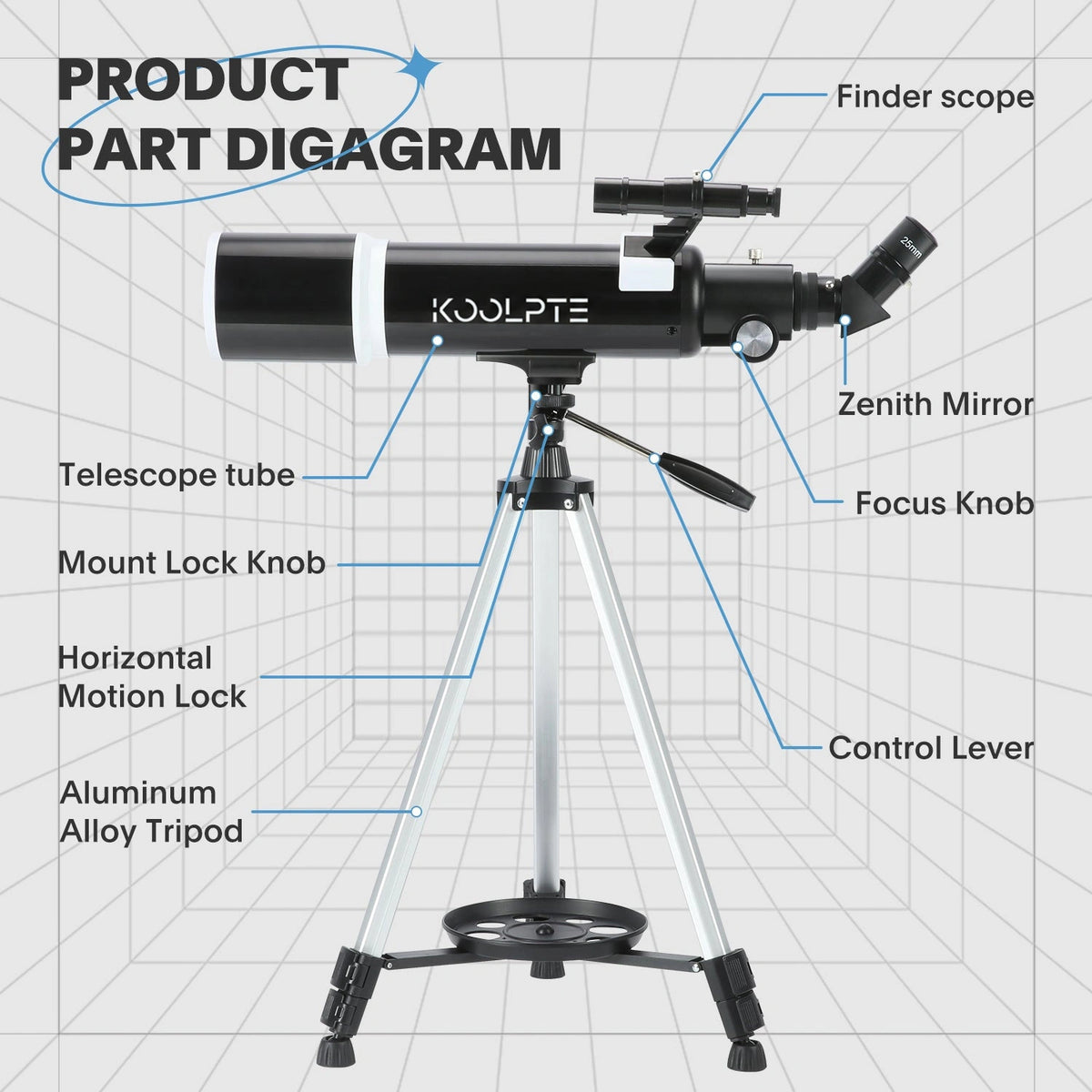
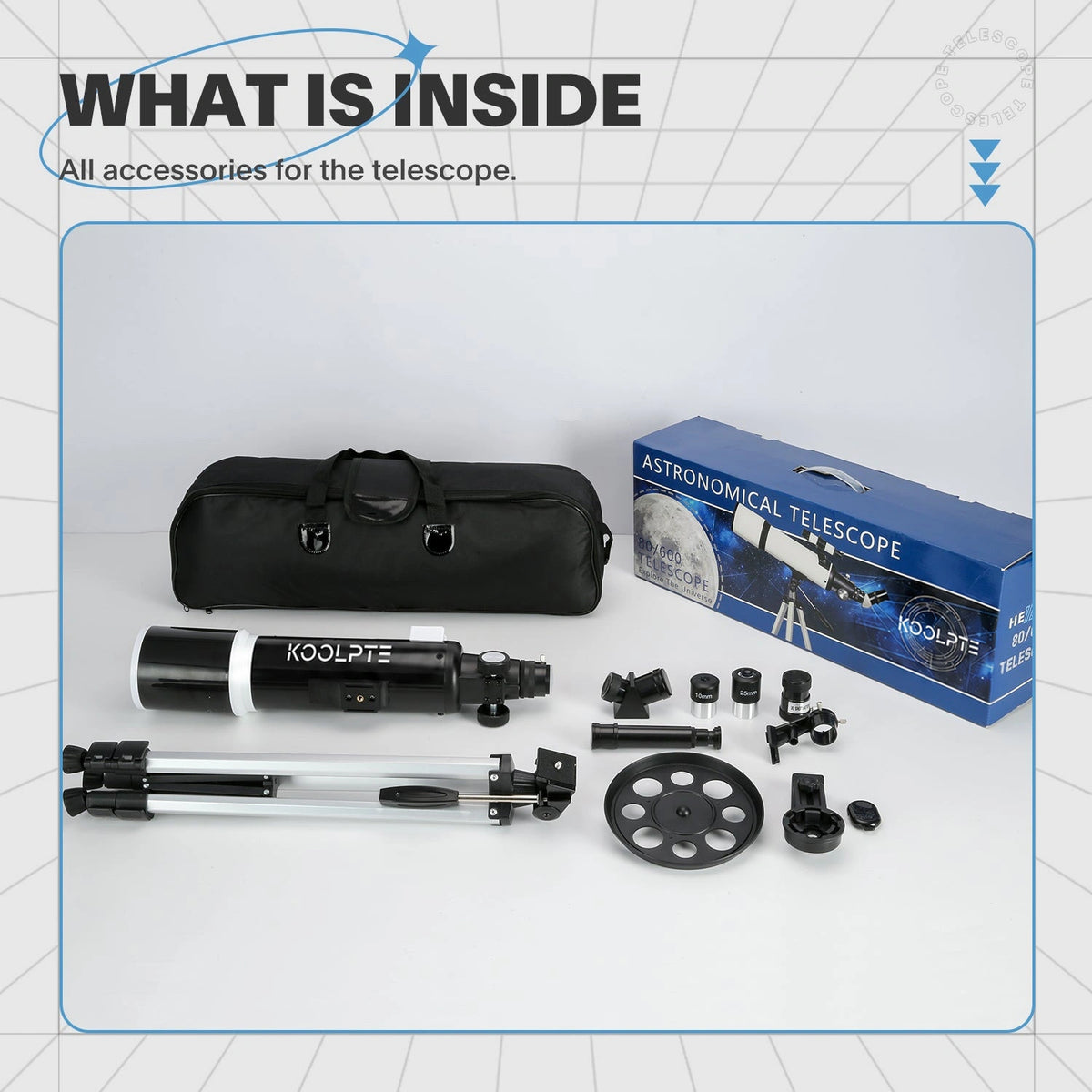
The kit includes 25mm and 10mm eyepieces, a 3× Barlow lens, 45° zenith mirror, finderscope, smartphone adapter, wireless remote, and padded carrying bag.
Discover the Moon in Greater Detail
Slide to compare a simulated out-of-focus Moon with a sharper, more detailed view.
before

After
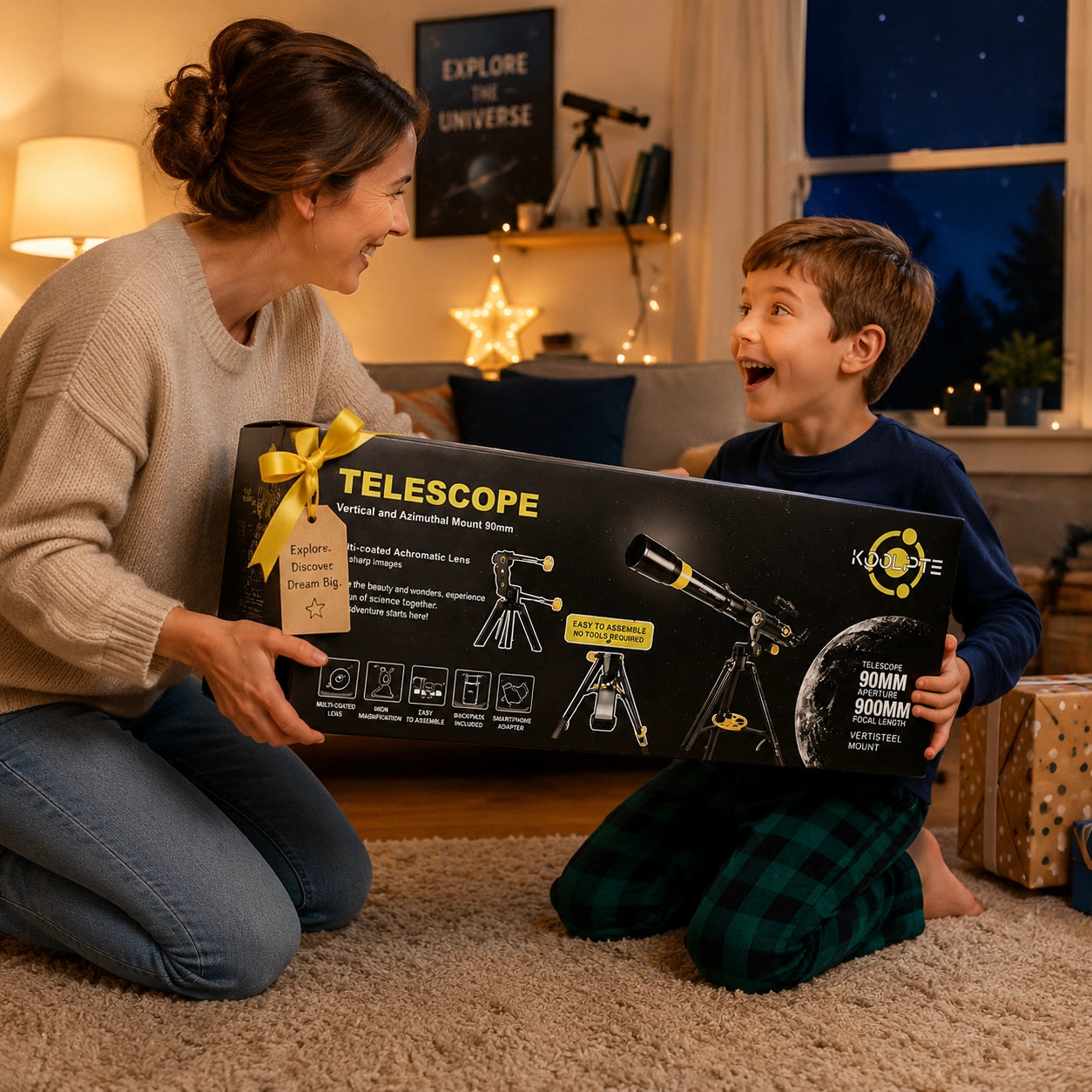
A brighter 80mm telescope for families and adult beginners ready to step up from the smallest starter models.
A Brighter First Upgrade
The 80mm aperture helps beginners see brighter Moon detail and more rewarding first planet views.
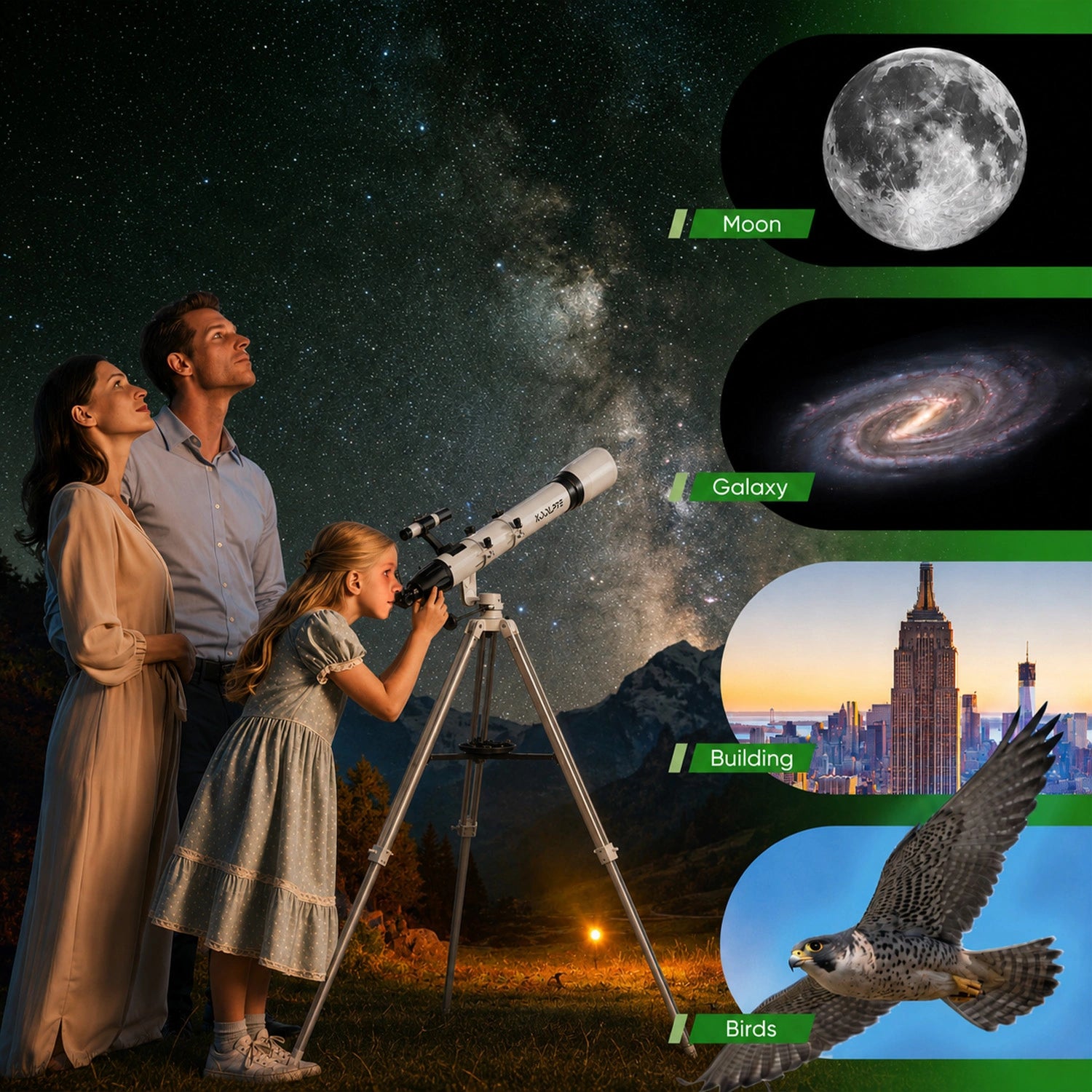
Family Stargazing Nights
Give kids, teens, and adults a shared telescope experience that still feels simple to set up and use.

For Adult Beginners
A balanced refractor telescope for adults who want more capability without moving into a complex mount system.
Watch customers unbox, set up, and try the Vega Plus 80/600 refractor telescope at home.

Compare our telescopes side by side to find the right one for you.
 Vega Precision
 Antares
 Vega Plus
Great telescope! Pictures are clear and vibrant. Easy to use.
Great starter Telescope. easy to set up, clear views of the moon, and the phone adapter works great. My daughter like it.
Works ok for the price
very good i love this telescope it works so well and i love it its pretty good for looking at saturn and other planets and the moon the zoom is very good it looks just like in the pictures very it has very good durability and very good alignment with planets i love this telescope i would reccomend buying this here is a picture i took of the moon using the telescope and the phone adapter
Excellent for looking at the night sky love that I can hook up my phone to it and capture on camera what im seeing
Watch to sky at night is very fun and make me calm down, always moon or star watch the detail on web, and now I also got my own one , it’s very cool to have , assemble together and just grab to my backyard porch, Lens changeable, easy to use and bottom 360 degrees turning, kid are very happy and want to use , this kit oraso come with phone adapter and remote control it’s great to have take pictures while use the phone , very good harbit for kids
I bought this telescope mainly to use with my kids on clear nights, and honestly it exceeded my expectations for the price. Setup was pretty straightforward and only took about 15 minutes. The tripod feels stable enough for backyard use, and the carrying bag makes it easy to store away when not using it.We were able to see the moon very clearly on the first night, including some crater details, which was really exciting. The phone adapter was also a nice bonus — took a few tries to line it up correctly, but once adjusted, we got some surprisingly decent moon photos with an iPhone.It’s lightweight, beginner-friendly, and doesn’t feel overly complicated like some other telescopes. Definitely a fun purchase for anyone getting into astronomy or just wanting something relaxing to do at night with family. Highly recommend for beginners!
Great price for what it does. Nice for beginner, got it for my daughter and she loves it. It come with multiple lens which it great and the case that come with it is nice too. Easy to carry around to change spot. Really like the phone holder so we can take picture of it. Also, the container to hold the extra lens is very nice too. There is also a tray area to put the lens for easy access if you need to change it, which is nice and convenience. Over all it is a great kit for the price and for beginners.
I bought it for my son. Absolutely he loves it. It's not heavy but good quality. Very easy to set up. 10 years old boy can handle it up all by himself. Also it looked as well.
Exciting birthday gift for my budding almost 7 year old STIM studies granddaughter
Was a gift for my father in law he loves it
Pretty good choice for kids birthday gift. My little girl love it. It can observe the moon pretty clearly. The size is also pretty lightweight, easy to carry.
Really good telescope as described. Tripod had a foot that had bad threads. Contacted the company and they are sending new tripod. Very quick response from company/ seller. Very satisfied.
It's been a while since I have this with me and I feel it is time to make a review about this product. Anyway, I gave 5 stars for this for the following: The assembly instructions are spot on, very easy so as the use of it. The size is excellent, it does not take a lot of space and storing it is not a big issue. The structure is very stable and field of view is excellent. I've used it in star gazing when the night sky is very clear and I've been taking it to the beach and some parks for bird watching. This is a portable telescope that does not bankrupt your wallet- very good for beginners in the star gazing department.
Great telescope! Pictures are clear and vibrant. Easy to use.
Great starter Telescope. easy to set up, clear views of the moon, and the phone adapter works great. My daughter like it.
Absolutely impressed with this telescope! The image quality is clear and sharp, and it was easy to set up even for a beginner. Great value for the price, sturdy tripod, and perfect for moon and star viewing. My family and I really enjoy using it at night.
This telescope is of very good quality and a bit heavy. It's quite easy to assemble — even a child can do it just by looking at the pictures. With this telescope, you can see distant objects very clearly. It is an 80mm aperture, 600mm focal length refractor telescope. It also comes with a carrying bag, making it easy to take outdoors.My Kid really love it.
As a complete beginner to astronomy, I was nervous about buying my first telescope, but this Koolpte model has exceeded all my expectations. The 80mm aperture and multi-coated optics deliver surprisingly clear, bright views of the moon, planets, and stars—way better than I thought possible at this price point. I’ve been able to see the moon’s craters in stunning detail, and even spot Jupiter’s moons and Saturn’s rings with the included eyepieces.Setting it up was a breeze, even for someone with zero experience. The AZ mount tripod is sturdy and easy to adjust, and the included phone adapter lets me take amazing photos of what I see, which has made sharing my stargazing adventures with friends so fun. The wireless remote control is a great addition too, letting me adjust the telescope without touching it and causing vibrations that blur the view.I love that it comes with everything I need to get started: two eyepieces, a Barlow lens, a finder scope, and a carrying bag. The bag is perfect for taking the telescope to dark sky areas, and the tripod is lightweight enough to carry easily. The build quality feels solid, with no flimsy parts, and the optics are clear with no distortion.This telescope has sparked a real love of astronomy in me, and it’s been so fun to learn and explore the night sky. If you’re a beginner looking for a high-quality, easy-to-use telescope, this is the perfect choice. 10/10, would buy again, and highly recommend to anyone starting their stargazing journey!
very good i love this telescope it works so well and i love it its pretty good for looking at saturn and other planets and the moon the zoom is very good it looks just like in the pictures very it has very good durability and very good alignment with planets i love this telescope i would reccomend buying this here is a picture i took of the moon using the telescope and the phone adapter
I bought this telescope mainly to use with my kids on clear nights, and honestly it exceeded my expectations for the price. Setup was pretty straightforward and only took about 15 minutes. The tripod feels stable enough for backyard use, and the carrying bag makes it easy to store away when not using it.We were able to see the moon very clearly on the first night, including some crater details, which was really exciting. The phone adapter was also a nice bonus — took a few tries to line it up correctly, but once adjusted, we got some surprisingly decent moon photos with an iPhone.It’s lightweight, beginner-friendly, and doesn’t feel overly complicated like some other telescopes. Definitely a fun purchase for anyone getting into astronomy or just wanting something relaxing to do at night with family. Highly recommend for beginners!
Exciting birthday gift for my budding almost 7 year old STIM studies granddaughter
I bought it for my son. Absolutely he loves it. It's not heavy but good quality. Very easy to set up. 10 years old boy can handle it up all by himself. Also it looked as well.
Start with the Moon, bright planets, and distant daytime targets. The 80mm aperture provides a brighter step up from smaller beginner refractors. Exact results depend on sky conditions, light pollution, eyepiece choice, and focus.
Yes. It is a balanced option for families, teens, and adult beginners who want more light and smoother fine adjustments without moving to a more complex telescope setup.
Start with the 25mm eyepiece at 24× to locate the target and focus. Move to 60× with the 10mm eyepiece after the view is stable. Use the 3× Barlow when the target and viewing conditions support higher magnification.
Yes. The included smartphone adapter and wireless remote can help you practice simple Moon and bright-target captures. Results depend on phone fit, focus, stability, and viewing conditions.
Koolpte telescopes include a 1-year warranty. Returns and cancellations follow the current refund policy.
Helpful support when you need it.


