
Customer video
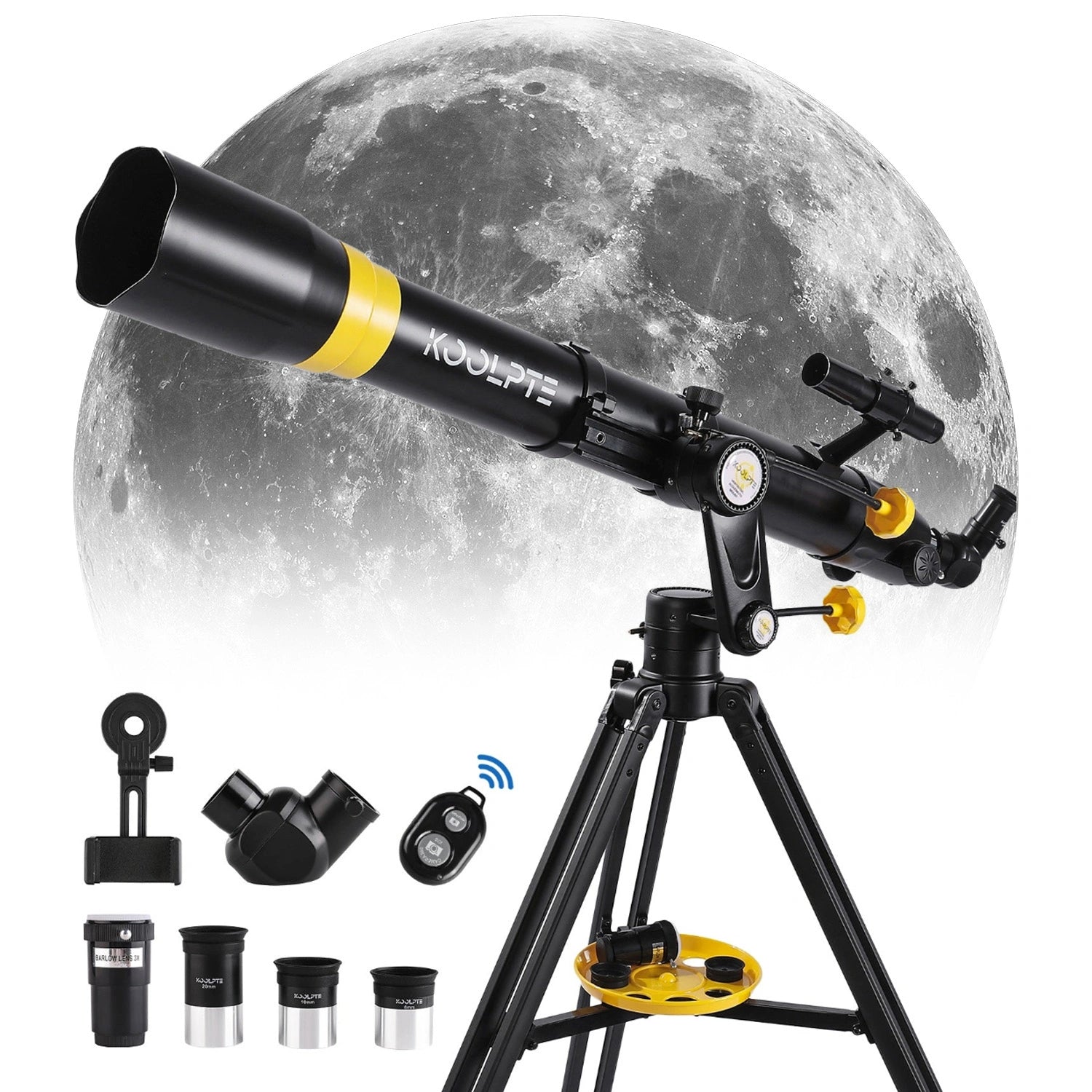


Long-Focus 90mm / 900mm Optics | Three Eyepieces for Moon & Planet Viewing
A little spooky, a lot of stargazing! Use code QUIZ10 for 10% off your first order.
✓ In Stock • Ships Today
30-Day Returns
1-Year Warranty
Secure & Protected Delivery
Koolpte Vega Precision Ultra 90mm Aperture 900mm Refractor Telescope
If you have any questions, you are always welcome to contact us. We'll get back to you as soon as possible, within 24 hours on weekdays.
Shipping Information
Use this text to answer questions in as much detail as possible for your customers.
Customer Support
Use this text to answer questions in as much detail as possible for your customers.
FAQ’s
Use this text to answer questions in as much detail as possible for your customers.
Contact Us
Use this text to answer questions in as much detail as possible for your customers.
Watch unboxing and setup moments for the long-focus Vega Precision Ultra 90/900 telescope kit.

Watch setup, unboxing, and real-use videos for the long-focus 90mm telescope built for Moon and planet viewing.
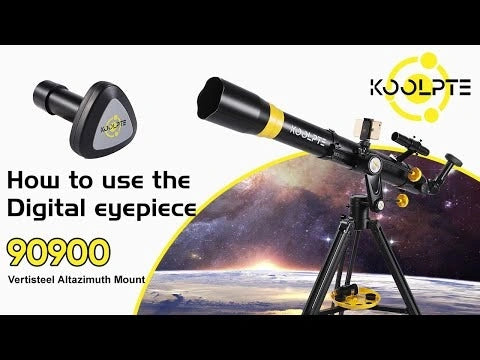

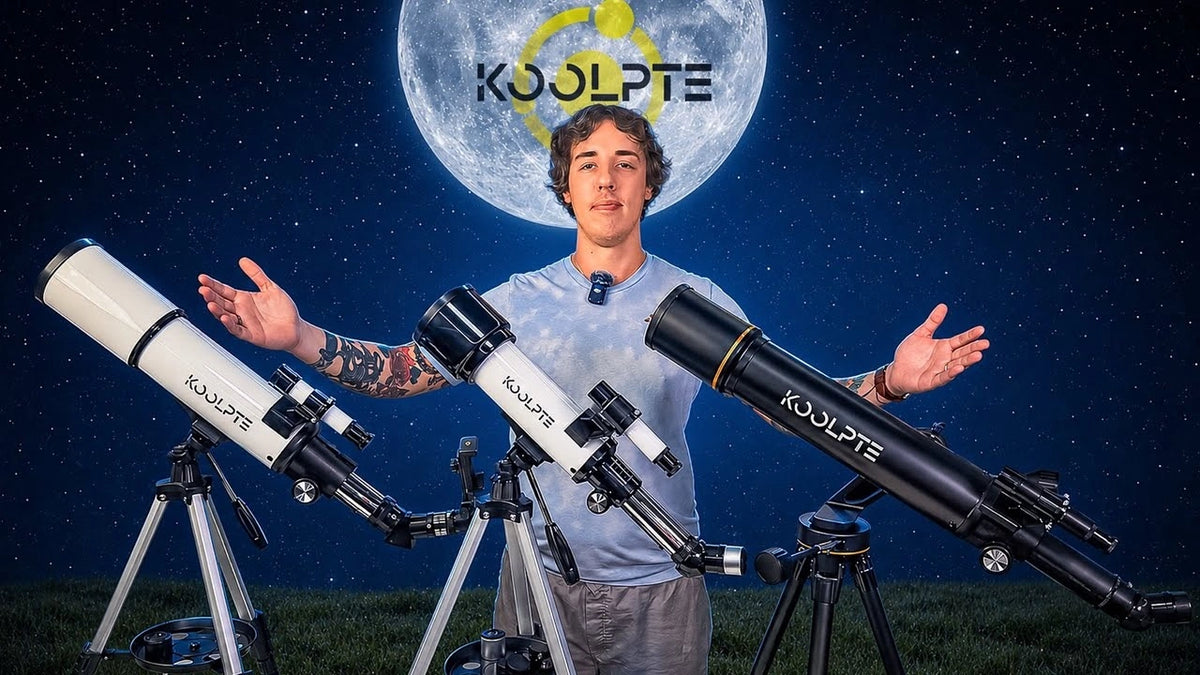


The 90mm aperture helps gather light for clearer Moon views, bright planet watching, and more rewarding observing sessions.

The longer 900mm focal length is designed for users who want more reach for lunar craters, Jupiter, Saturn, and bright planetary targets.

The 20mm, 10mm, and 6mm eyepieces give beginners multiple viewing steps. Practical clarity depends on focus, target brightness, and sky conditions.

Small adjustments become more important at higher magnification, helping observers keep bright targets centered as they move across the sky.

Vega Precision Ultra includes the essentials for serious beginners who want a more detail-focused Moon and planet telescope.
A long-focus 90mm telescope for serious beginners, Moon observers, and growing hobbyists who want more detail.
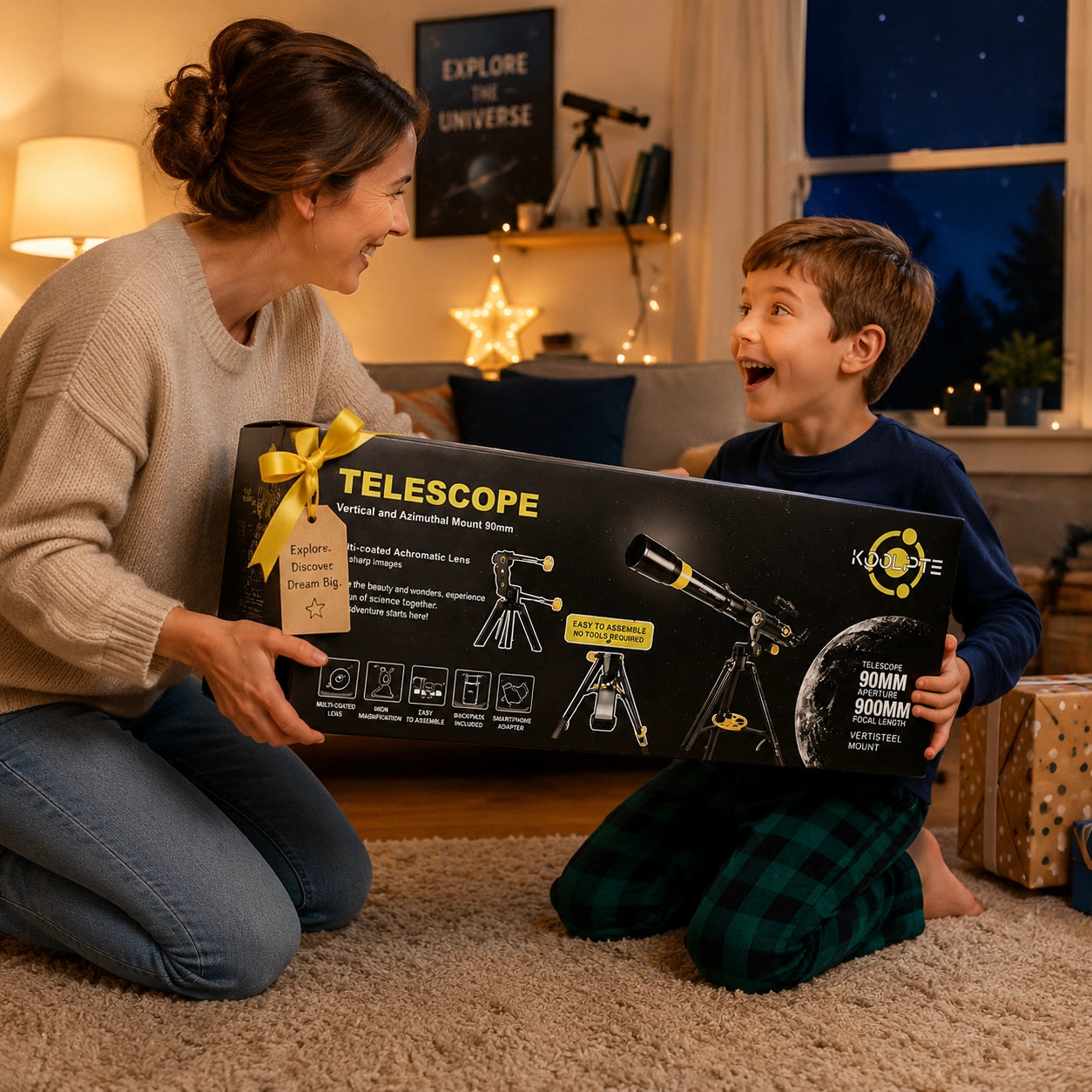
For Moon Detail Seekers
The 900mm focal length helps observers spend more time studying lunar craters, shadows, and bright surface detail.
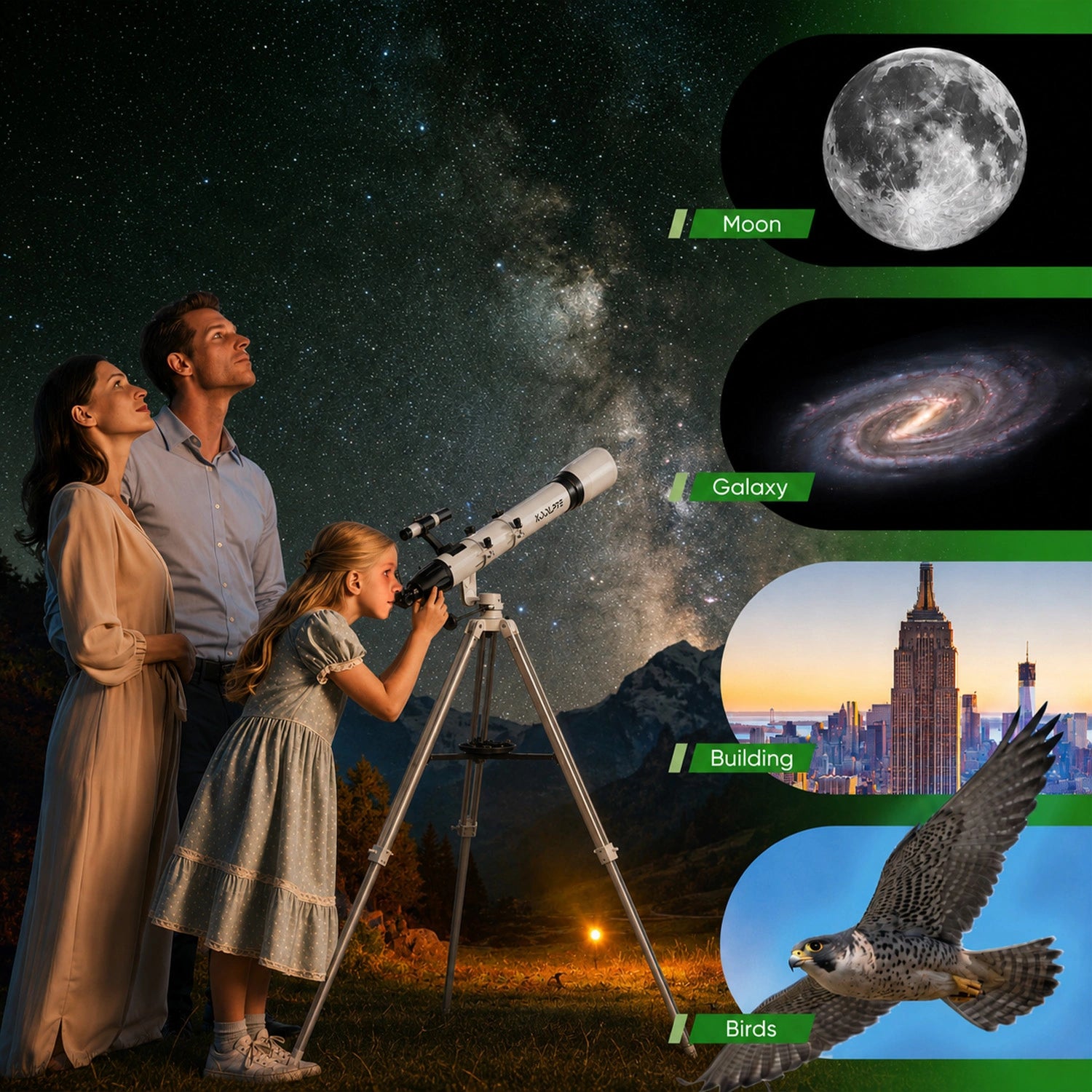
For Planet Watching Nights
Use the long-focus design for repeated bright-planet sessions with Jupiter, Saturn, and other clear night-sky targets.

For Growing Hobbyists
A stronger step for beginners who already know they want more reach than a compact starter telescope.
Compare our telescopes side by side to find the right one for you.
 Koolpte Vega Precision Ultra 90mm Aperture 900mm Refractor Telescope
 Vega Precision
 Antares
This telescope is very beginner-friendly. My son is ten years old and has recently become deeply interested in astronomy—he absolutely loved receiving this gift. It's easy to set up and reasonably priced. Unfortunately, the weather has been bad lately, so we haven't seen any planets yet. Super cool!
for its price it's a good telescope, I recommend it to everyone!
Great images. Worth it.
This is a well made telescope. Pretty easy to assemble, and the adjustment knobs are a plus. One issue I had was with the Barlow lens. I can’t see anything through it. All the other lenses work well except for the Barlow. The phone holder attachment is also difficult to work with. I found it easier just to hold the phone up to the eyepiece. I was able to get great views of the moon, and was even able to see Jupiter. Overall, this is a good telescope.
Works great. Purchased it for Christmas and the family enjoys it
This telescope exceeded my expectations! The optics are clear and sharp, making it easy to see the moon and stars in great detail. Setup was simple, and the mount feels stable and smooth to use. I also love the phone adapter and remote for taking photos hands-free. Great choice for beginners and casual stargazing!
This is my first telescope kit. It comes with amazing images. The kit are well made. It took me about 30 minutes to set it up. It is not too heavy, I really like to take it out with kids at weekend. Happy to find it online.
This is a budget-friendly entry-level refractor telescope that makes an excellent gift. My son was absolutely thrilled to receive it! Now, he eagerly looks forward to nighttime every single day, just so he can take it outside and explore the night sky.With its 90mm aperture and 900mm focal length, it offers clear views of the Moon and planets, while the user-friendly AZ mount and phone adapter make it perfect for a young beginner to enjoy astronomy.
Muy buen material
Love it great portable telescope
I had so much fun using this over the summer
This is a nice telescope works very well.
Love it great portable telescope
Excelente. Muy buenas imágenes.
Some parts came damaged but it’s useable so that’s the only reason for the 4/5
This is exactly what you should expect from your typical $200 telescope works well and have seen some weird things so far so keep your eyes on the sky y’all. The X-Files are real.
This is a budget-friendly entry-level refractor telescope that makes an excellent gift. My son was absolutely thrilled to receive it! Now, he eagerly looks forward to nighttime every single day, just so he can take it outside and explore the night sky.With its 90mm aperture and 900mm focal length, it offers clear views of the Moon and planets, while the user-friendly AZ mount and phone adapter make it perfect for a young beginner to enjoy astronomy.
This is a well made telescope. Pretty easy to assemble, and the adjustment knobs are a plus. One issue I had was with the Barlow lens. I can’t see anything through it. All the other lenses work well except for the Barlow. The phone holder attachment is also difficult to work with. I found it easier just to hold the phone up to the eyepiece. I was able to get great views of the moon, and was even able to see Jupiter. Overall, this is a good telescope.
Muy buen material
This telescope is very beginner-friendly. My son is ten years old and has recently become deeply interested in astronomy—he absolutely loved receiving this gift. It's easy to set up and reasonably priced. Unfortunately, the weather has been bad lately, so we haven't seen any planets yet. Super cool!
This telescope exceeded my expectations! The optics are clear and sharp, making it easy to see the moon and stars in great detail. Setup was simple, and the mount feels stable and smooth to use. I also love the phone adapter and remote for taking photos hands-free. Great choice for beginners and casual stargazing!
Works great. Purchased it for Christmas and the family enjoys it
This is my first telescope kit. It comes with amazing images. The kit are well made. It took me about 30 minutes to set it up. It is not too heavy, I really like to take it out with kids at weekend. Happy to find it online.
Product came & had all parts. Performed as described.
This is exactly what you should expect from your typical $200 telescope works well and have seen some weird things so far so keep your eyes on the sky y’all. The X-Files are real.
Excelente. Muy buenas imágenes.
Its long 900mm focal length and 90mm aperture make it especially well suited to repeated Moon and bright-planet observation.
No. 450× is the theoretical combination produced by the 6mm eyepiece and 3× Barlow. Practical usable magnification is often much lower and depends on target brightness, focus, atmospheric stability, and seeing conditions.
Start with the 20mm eyepiece at 45×. Once the target is centered and sharp, move to 90× or 150× as conditions allow.
They help you make smaller directional corrections while observing, which is especially useful when higher magnification narrows the field of view.
Yes. Use the included smartphone adapter and wireless remote. The Moon is the easiest target to practice with first.
Helpful support when you need it.


